



Live now
Registration Open
19 September 2026 - 20 November 2026
Regional hub
Kolkata
Open to
West Bengal, Bihar and Jharkhand
Need assistance?
Contact the helpdeskIdentify a local problem → Build a practical solution → Show how it can work → Explain the impact → Take it further
ABOUT
Ideas are only the beginning
Every community has problems that people learn to live with: unsafe roads, poor access to healthcare, water shortages, crop losses, waste, transport gaps, learning difficulties, disaster risks and many others. The Seva First Innovation Challenge asks young people to look closely at these problems and do something about them.
Understand: Show what the problem is, who it affects and why it matters.
Build: Explain how the solution can be implemented, what it may cost and how long it may take.
Implement: Create a path towards prototypes, pilots, incubation and wider adoption.
WHO CAN PARTICIPATE?
Open to individuals and teams
The Challenge is open to participants from different educational, professional and community backgrounds.
Junior Category
School studentsITI studentsPolytechnic studentsUndergraduate students
Judged mainly on problem understanding, originality of thinking and practicality. A working model is encouraged, but may not be compulsory.
Open Category
GraduatesYoung professionalsResearchersEarly-stage startupsIndependent innovatorsCommunity groups
Entries should present a stronger implementation case. A prototype, proof of concept or pilot will add weight to the submission.
THEMES
Choose a problem that matters to you
The themes below are meant to guide participants, not limit them. If you have identified an important problem outside these areas, you may still submit it as long as the problem is clear and the solution is practical.
Village & Panchayat Innovation
Solutions for better public services and everyday life in villages and local communities.
Agriculture & Allied Sectors
Ideas that can improve farm productivity, reduce losses and strengthen rural livelihoods.
Education & Skill Development
Solutions that make learning more accessible, useful and effective.
Healthcare
Practical ways to improve access to healthcare and strengthen preventive and emergency care.
Urban & Civic Innovation
Solutions for everyday problems in towns and cities.
Environment & Sustainability
Ideas that protect natural resources and reduce environmental damage.
Employment, Livelihood & MSMEs
Solutions that help people find work, build businesses and reach markets.
Women & Child Development
Innovations that improve safety, health, wellbeing and access to opportunity.
Disaster Management & Community Safety
Solutions that help communities prepare for, respond to and recover from disasters.
Transport & Mobility
Ideas that make travel safer, easier and more accessible.
Energy
Affordable and sustainable solutions for homes, communities and public infrastructure.
Tourism & Cultural Innovation
Ideas that improve tourism while creating opportunities for local communities.
FOCUS AREAS FOR WEST BENGAL, BIHAR & JHARKHAND
Why the Eastern Region matters
West Bengal, Bihar and Jharkhand have a wide range of challenges and opportunities, from floods, river systems and climate risks to agriculture, fisheries, healthcare, education, livelihoods and growing urban centres.
Resilient People. Thriving Regions.
A Stronger India.
200+
Million People
3
States
Vast
Opportunities
Climate & Flood Resilience
Flood forecasting, river monitoring, embankment monitoring, cyclone preparedness and community response.
Himalayan & Hill Solutions
Landslide monitoring, mountain connectivity, water management, remote healthcare and sustainable tourism.
Tea, Horticulture & Plantation Innovation
Better crop health, processing, productivity, supply chains and market access.
Fisheries & Aquaculture
Water-quality monitoring, disease management, cold chains and better market connections.
Tribal & Remote Communities
Solutions for healthcare, education, connectivity and livelihoods in hard-to-reach areas.
Bamboo, Handloom & Handicrafts
Product innovation, sustainable materials, improved production and digital market access.
River & Water Systems
Water quality, erosion, irrigation, groundwater management and flood resilience.
HOW THE CHALLENGE WORKS
From real problem to real-world pathway
Every submission should make the problem, solution, implementation route and expected impact easy for the jury to understand.
- 01
Identify the Problem
Start with your community
School · village · town · district · workplace
Start with a problem you have actually seen in your school, village, town, district, workplace or community.
Outcome · A clear, grounded problem statement
- 02
Develop the Solution
Before submission
Build · improve · change
Explain what you want to build, improve or change, and why your approach can work.
Outcome · A practical solution approach
- 03
Submit Your Proposal
Online Innovation & Implementation Plan
Complete the online Innovation & Implementation Plan and upload supporting material, if available.
Outcome · Complete proposal submitted
- 04
Screening & Shortlisting
Eligibility · completeness · technical merit
Entries will be checked for eligibility, completeness and technical merit.
Outcome · Shortlisted entries move to regional evaluation
- 05
Regional Evaluation
Expert jury presentation
Shortlisted participants will present their solution, model, prototype or implementation plan before an expert jury.
Outcome · Promising innovators identified
- 06
Mentoring & Prototype Support
After shortlisting
Guidance · refinement · next-stage preparation
Selected innovators may receive guidance to strengthen the solution and prepare it for the next stage.
Outcome · Stronger prototype, pilot or implementation plan
- 07
Final Evaluation
Final challenge evaluation
The strongest entries will move forward through the Challenge evaluation process.
Outcome · Leading innovations selected for recognition
- 08
Pilot & Adoption
After the Challenge
Institutions · departments · industry partners
Promising solutions may be connected with institutions, government departments, industry or implementation partners for further development and possible pilot use.
Outcome · Pathway to prototype, pilot, incubation or adoption
RECOGNITION & SUPPORT
Your idea shouldn't end
with a certificate.
We help promising ideas move beyond the award — with mentorship, prototype support, pilot opportunities and a pathway to real-world impact.
MentorshipGuidance from experts
Prototype SupportTurn ideas into working solutions
PilotTest and validate in real settings
Adoption OpportunitiesPathways to real-world impact
IncubationResources to help you grow
Expert mentorship
Selected innovators may receive mentoring and technical guidance to strengthen the solution.
Incubation support
Promising ideas may be connected with incubation and prototype-development opportunities.
Pilot opportunities
Practical solutions may be connected with institutions, departments, industry or implementation partners.
Research support
Guidance can help participants improve evidence, feasibility and implementation plans.
Ecosystem access
Kolkata serves as the regional hub for bringing ideas from West Bengal, Bihar and Jharkhand together.
National recognition
Strong local solutions can earn visibility through the Seva First Innovation Challenge platform.
WHAT YOU NEED TO SUBMIT
Keep your submission clear and practical
The jury should be able to understand the problem, the solution and how it can be implemented.
Junior participants may submit a strong idea with a clear implementation plan.
Open-category participants should present a stronger implementation case.
Prototype, proof-of-concept or pilot evidence can add weight to the submission.
- 01
Problem & Location
What is the problem, and where have you observed it?
- 02
Proposed Solution
What are you proposing to build, change or introduce?
- 03
Technology or Method
How will the solution work, and why is this approach suitable?
- 04
Implementation Plan
Who needs to do what, and in what order?
- 05
Cost & Funding
What would it realistically cost to develop and implement the solution?
- 06
Beneficiaries
Who will benefit, and approximately how many people could it help?
- 07
Timeline
How long would it take to reach a working prototype or pilot?
- 08
Expected Impact
What social, economic or environmental difference can the solution make?
- 09
Scalability
Could the solution work in another district, state or community? What would need to change?
- 10
Prototype or Pilot
If you already have a model, prototype or pilot, share photographs, documents, results or other evidence.
WHAT THE JURY MAY LOOK FOR
Grounded ideas with a route to implementation
The jury may consider the relevance of the problem, originality of the solution, practicality, technical feasibility, cost, expected impact, sustainability, scalability and the quality of any prototype or pilot.
Problem relevance
The jury looks for grounded problem understanding and relevance to beneficiaries.
Originality & practicality
A simple, affordable solution that works can be stronger than unnecessary complexity.
Implementation feasibility
Implementation plan, cost, timeline and dependencies all matter.
Expected impact
Clear beneficiaries and realistic impact estimates strengthen the submission.
Scalability & evidence
A model, prototype, pilot, photographs, results or supporting documents add weight.
QUESTIONS
Everything you need to know.
Start with the essentials, then review the final Challenge guidelines before you apply.
It is a platform for young people to identify real problems around them and develop practical solutions that can be implemented and, where possible, scaled.
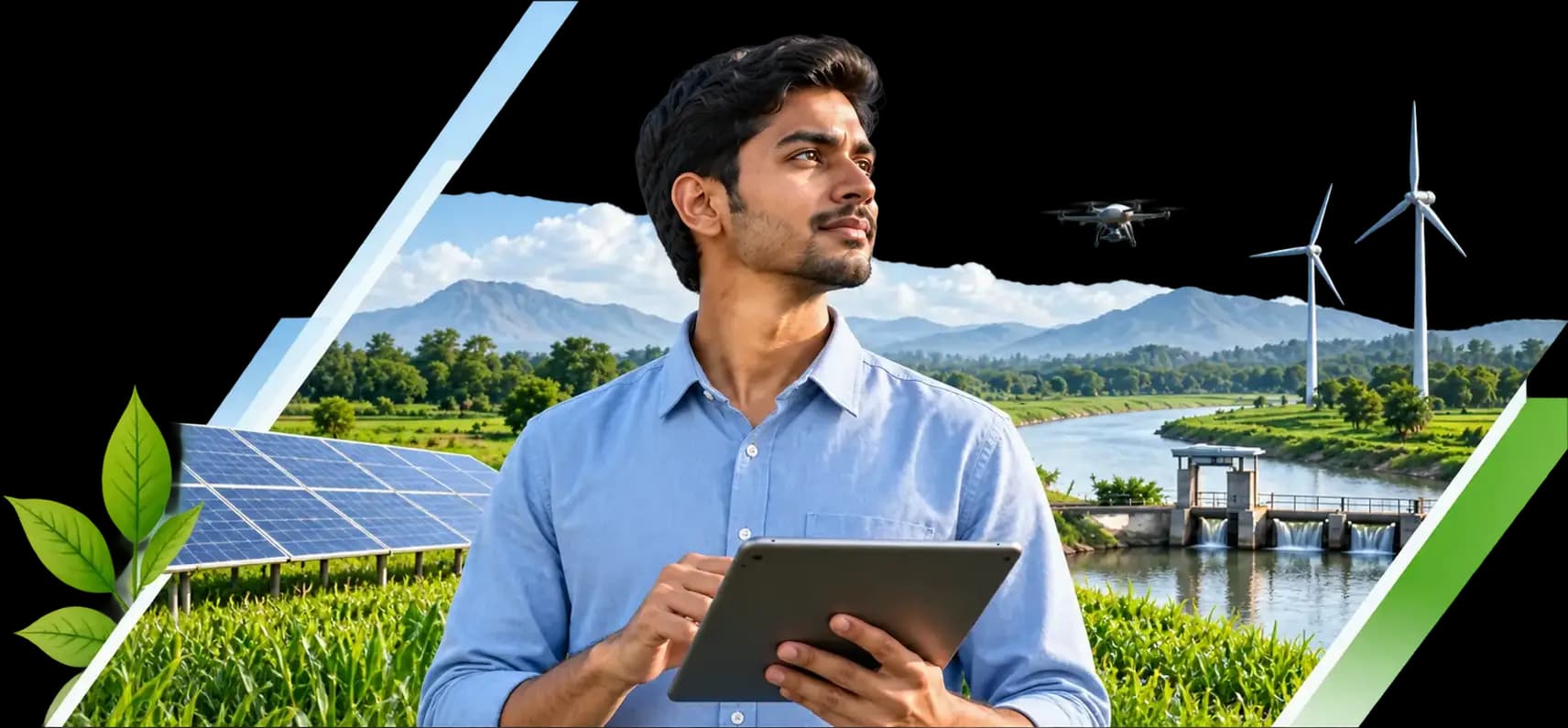
Ideas today. Stronger tomorrow.
Innovate Locally.
Impact Nationally.
Identify a local problem, build a practical solution, show how it can work, explain the impact and take it further.
Register NowPeople · Innovation · Sustainability · Tomorrow
Applications open
19 September 2026 - 20 November 2026